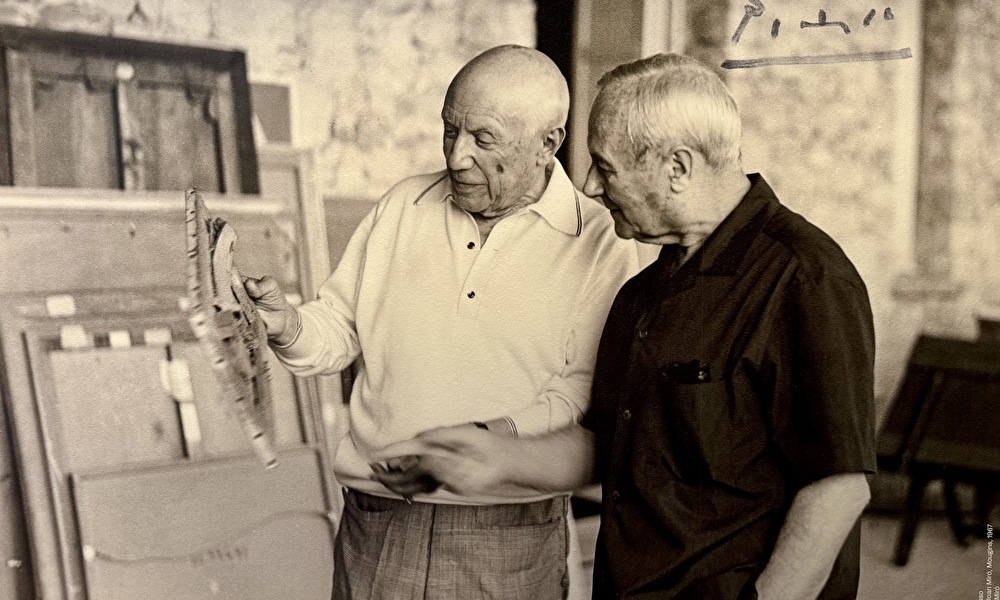
Two Worlds of Art: Picasso and Miró
A Visit to the Picasso and Miró Museums in Barcelona
Barcelona is home to countless museums, yet two of them continue to leave a lasting impression: the Museu Picasso and the Fundació Joan Miró. We visited them again this year, without rush, allowing ourselves to be inspired by the worlds of two very different artists who are inseparably linked to this city.
Museu Picasso – Back to the Beginning
Visiting the Museu Picasso felt like stepping back in time. Not only to the early years of Pablo Picasso as an artist, but also to Barcelona at the turn of the 20th century — a city full of change, ambition, and creative restlessness.
The museum itself is an experience. Spread across five medieval palaces in the El Born district, we wandered through cool stone corridors and quiet courtyards, where the sounds of the city faded. Even before seeing a single painting, the space seemed to invite us to slow down.
What struck us immediately was the intimacy of the museum. Instead of the famous abstract Picassos one often expects, we were greeted primarily by his early works: academic studies, realistic portraits, and experiments with style and emotion. It was fascinating to see how technically skilled he already was, while at the same time constantly trying to break free from that perfection.
At several works, we lingered longer than planned. The paintings from his Blue Period were particularly moving: sober, melancholic, and profoundly human. You feel the presence of a young artist who is searching, doubting, and observing.
What made this visit especially memorable was realizing that Barcelona is not a footnote in Picasso’s life, but a foundation. It was here that he learned to see — and that sensibility is evident in every detail.
Fundació Joan Miró – Art that Breathes
A few months later, we visited the Fundació Joan Miró, high on Montjuïc. Whereas the Picasso Museum feels introspective and historical, this museum radiates light, space, and playfulness. The building, bathed in natural light, allows the art to literally breathe.
Miró’s work surprised us again, even though we were familiar with his distinctive style. The bright primary colors, the floating forms, the seemingly childlike lines — everything appears free and spontaneous, yet a layered, deeply personal visual language emerges upon closer observation. Symbols recur, motifs evolve, and slowly his vision becomes tangible.
We wandered past paintings, drawings, ceramics, and sculptures, noticing how Miró disregarded conventional boundaries. Some works made us smile, others provoked questions, and still others felt almost meditative. The sculptures, partly indoors and partly outdoors, stayed with us: not merely objects, but beings integrated into their surroundings.
What moved us most was the optimistic atmosphere of the museum. Even when Miró’s colorful work emerges from personal or political tensions, there remains space for imagination, playfulness, and hope.
Barcelona as a Silent Third Character
During both visits, we sensed Barcelona’s strong presence. Not intrusive, but palpable — in the Picasso Museum through the city’s history and context, in the Miró Museum through light, space, and sweeping views of the city.
These museums are not isolated worlds. They are intertwined with Barcelona’s rhythm, its past, and its openness. Visiting them again this year gave us not only a deeper understanding of Picasso and Miró but also of the city that shaped them — and which they, in turn, influenced.
Our year in Barcelona was enriched by these visits. Not because we “saw it all,” but because we took the time to look, to pause, and sometimes to understand nothing at all. Picasso and Miró offered us no answers, only perspectives — and that is what makes their museums unforgettable.